
I’ll focus on two mods here in particular: Chorus adjustments and variable modulation depth, and self oscillating filters. Might add other bits later, but these seem the most interesting ones to me.
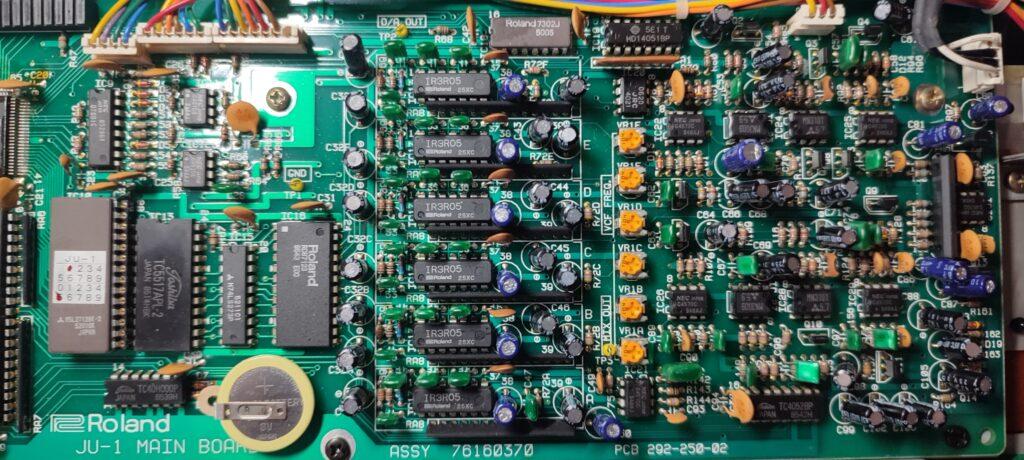
See also here: https://www.modwiggler.com/forum/viewtopic.php?t=299416
Service Notes: https://www.synthxl.com/roland-juno-2/#google_vignette
Making the VCF go into self-oscillation
It’s common knowledge that most implementations of the IR3R05 do not go into self-oscillation. According to Rob Keeble, if memory serves, this was done in order to prevent clipping. While the VCFs in the JX-8p, MKS-50, Alpha Juno 1 & 2, or MKS-80 cannot self oscillate, some implementations can, for instance Rob’s wonderful Eurorack version of the JX VCF. So, to me this looked more like a matter of scaling than general incapability, and yep, you can make em go “ringggg” easily.
A86 “Noise Shots” presets with reso and then self osc:
So, check out resonance control on the Alpha Juno here:
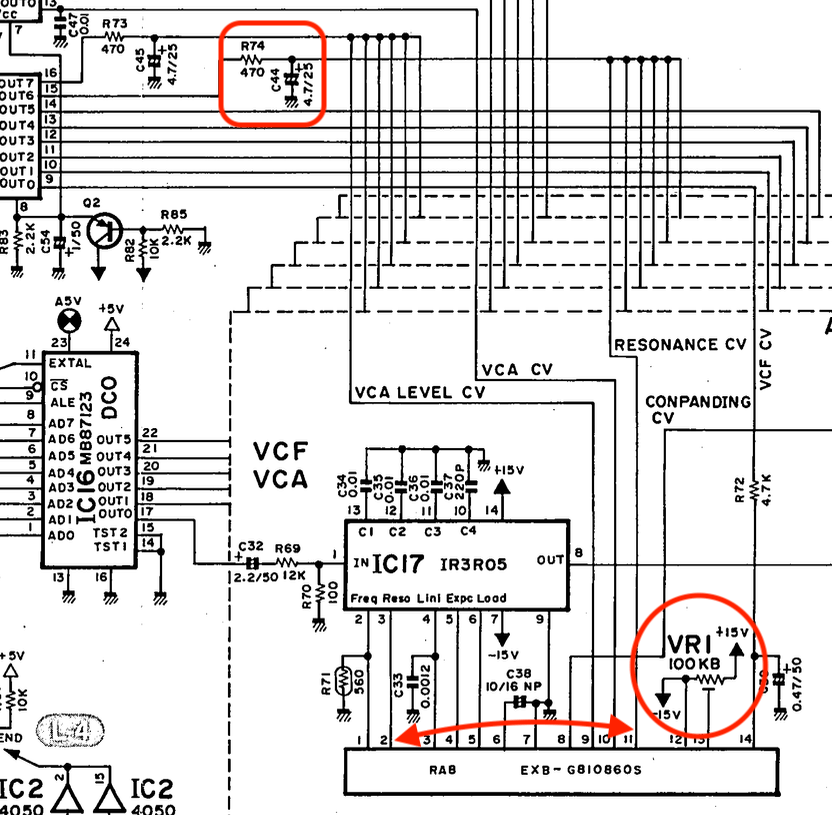
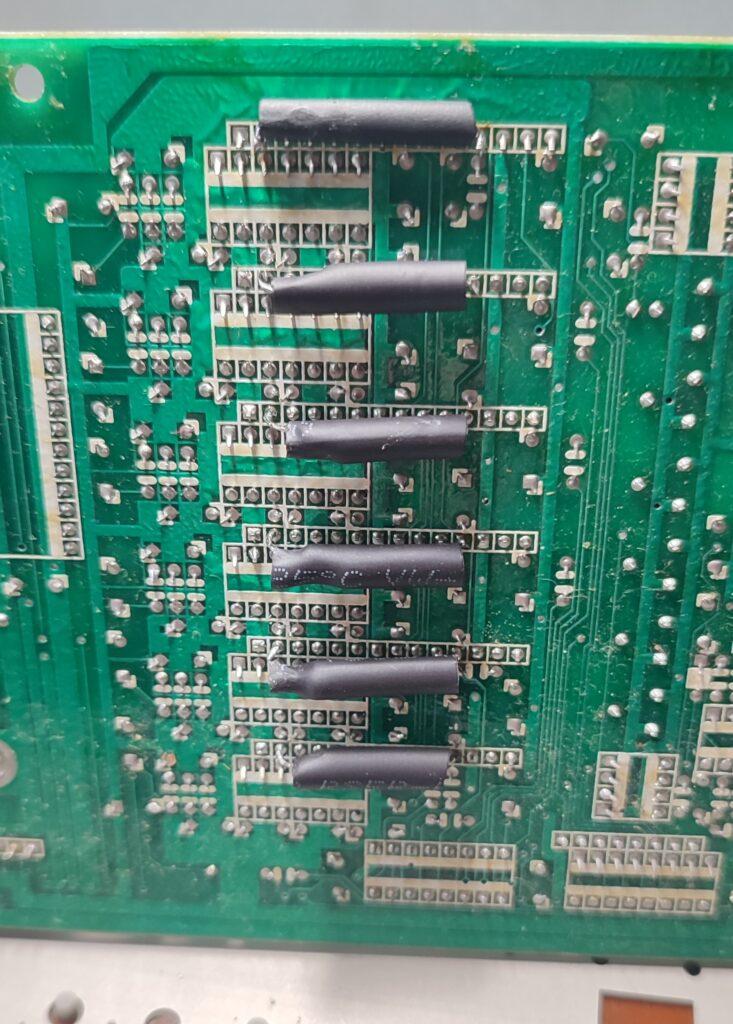
The control signal is common for all voices, passing R74 (470 ohms) and being smoothed by C44, before it is distributed to the G8108605 resistor arrays at each voice. The datasheet does not show the resistor values for these arrays, but I traced them here:
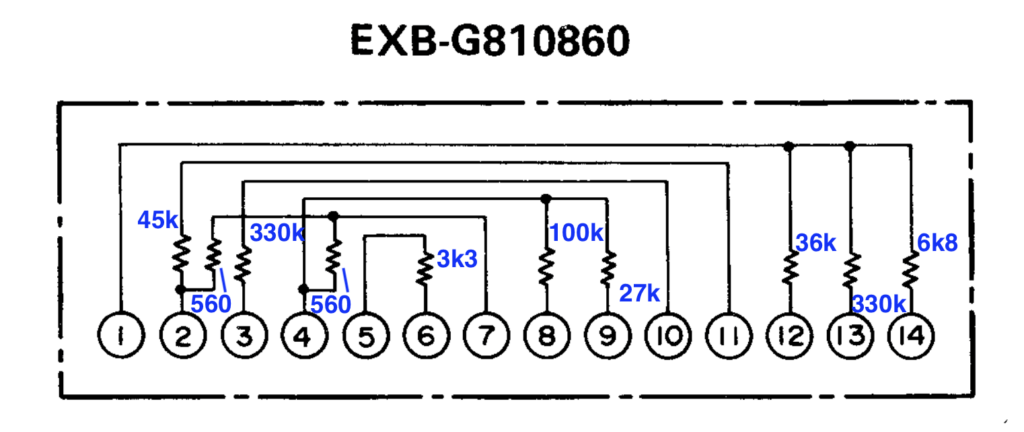
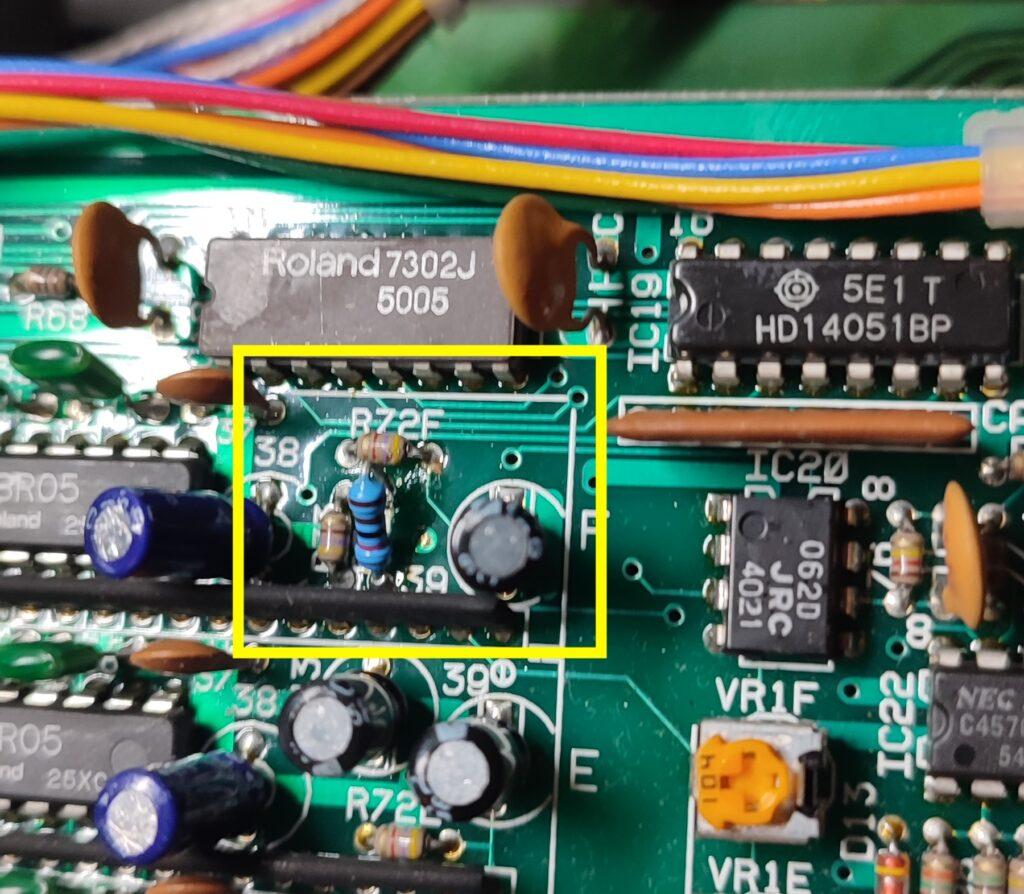
Relevant for us here is the resistance between Pins 11 and 2, which is the resonance CV path. If you put an 68k resistor in parallel with these two pins, your filter can now go well into self oscillation. Actually, I reduced the amount a bit by replacing R74 (the common resistor feeding all arrays with CV) with a 1k2 resistor, so I got self oscillation at resonance value 125, which I found the least intrusive way.
You will find that the reso thins out the passband of the filter massively, so why do this? In some cases, a second (sine) oscillator might be nice, and in some cases you might wanna do jungalist basses like this one here, innit…
Tuning your self oscillating filters
At keyfollow value 15 (maximum), your filter can track to octaves, but you need to tune your individual voices unless ypu like “micro” (more like macro) tunign scales 🙂 Set reso to max, all DCOs off, and VCF keytracking to max, then calibrate by ear or tuner. Since the VCA outs of all voices are mixed, you have a hard time knowing which voice is playing at the present moment. When a note was off, I used a 2k resistor and pulled the reso control pin of each VCF IC after another to ground while holding that note. If the sound vanished, I found my correlated trimmer for turning. This method is a tad tedious, but I guess teh best we get until someone comes up with a cleverer idea.
Chorus depth modification
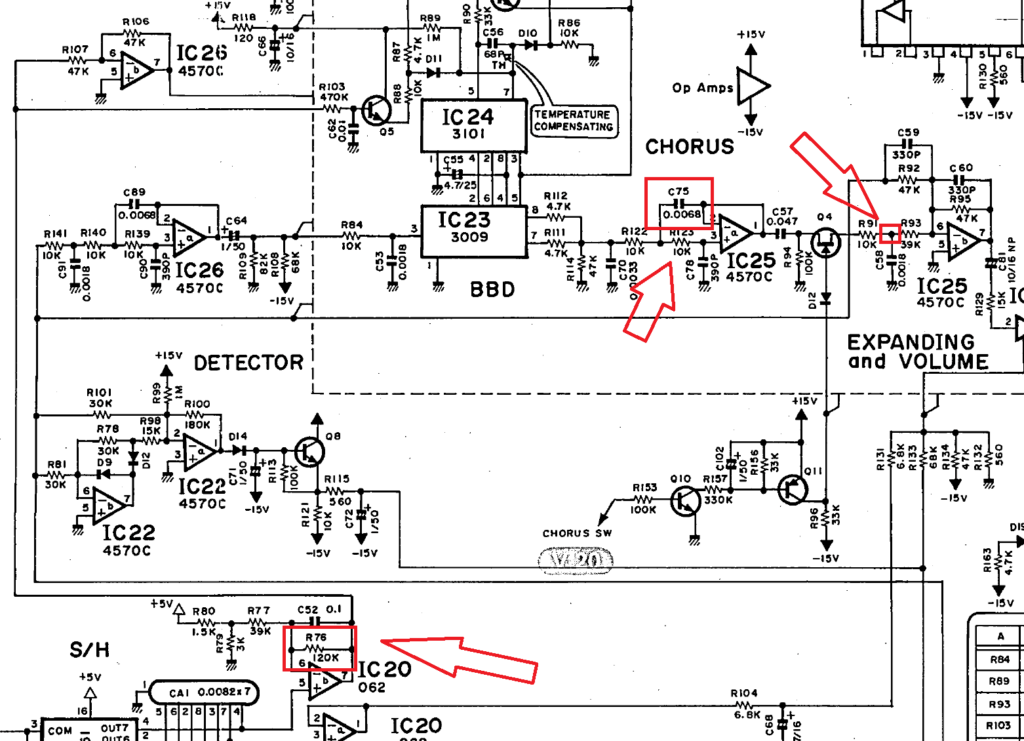
You can change the modulation depth of the Chorus LFO easily by replacing R76 (120k) with a 10k resistor and 200k Pot in series. With the pot fully closed, your Chorus is (almost entirely) static; pot fully open, you get quite some wobble. Anything beyond 220k resistance in place of R76 gets too extremne to my taste.
I added a bit more guts to my chorus portion by increasing C75 to 68nf (100nf also good). This lowers the highpass frequency at the emphasis part post+chorus a bit without making things too mushy. Augmenting the value of C57 would add more mid frequencies to the chorus but that’s not to my taste.
If you want some variable chorus output level option. Wire a 100k pot across the terminals of C58. OR replace R94 with a 100k pot.